
Greater Boston & Eastern Massachusetts
Draft & Smoke Problem Repair
We diagnose why your fireplace smokes, backdrafts, or refuses to draw — flue sizing, smoke chamber geometry, house pressure, wind effects — and fix the actual cause, not the symptom.
Draft diagnostics typically run $149–$299, and most corrective work — smoke chamber parging, damper replacement, or a draft-correcting cap — lands in a typical range of $350–$2,800 depending on what the evaluation finds; full reline projects are quoted separately.
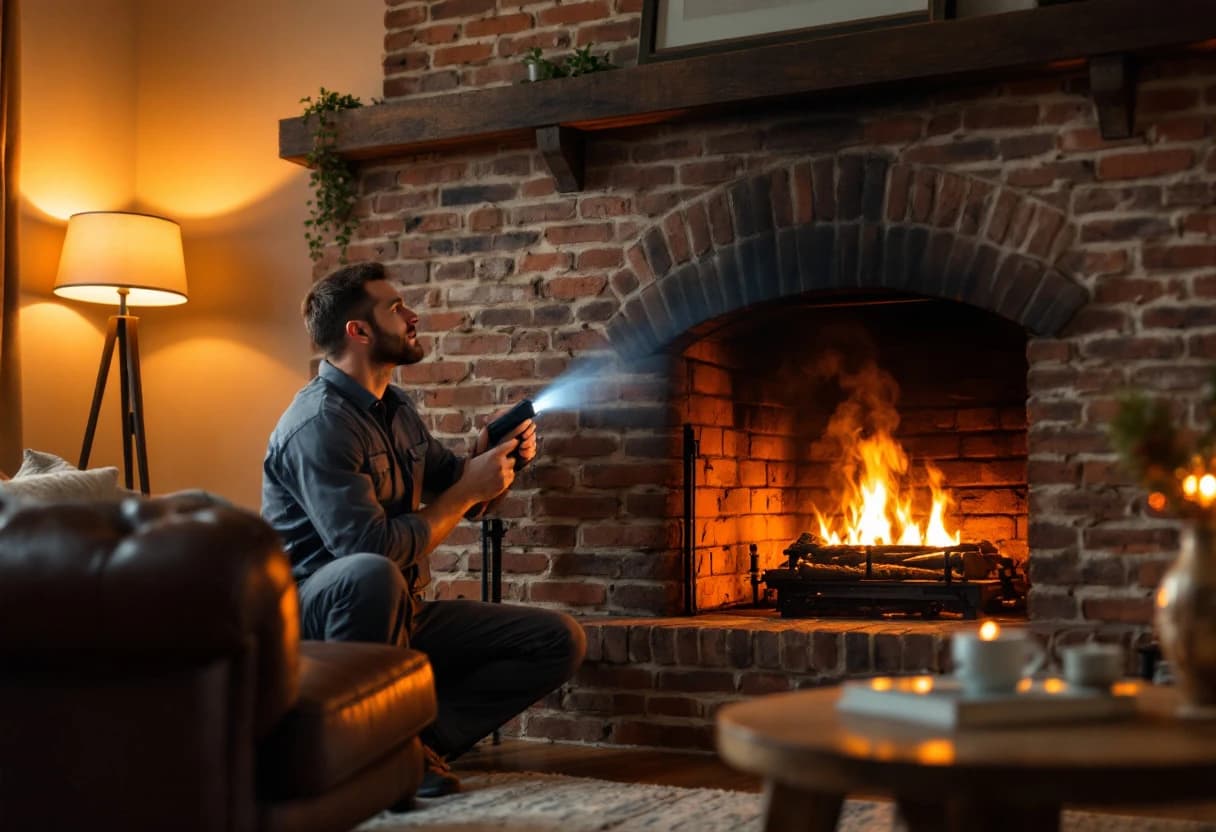
Every autumn, searches for "fireplace smokes into house" spike across Greater Boston, and every autumn our phone at (781) 653-5644 rings with some version of the same story: the first cold night arrived, someone lit the first fire of the season, and something was clearly wrong. Chimneys have a way of announcing their problems exactly when you need them most. The good news is that most of these problems are well understood, diagnosable in a single visit, and fixable before deep winter sets in — provided you do not wait until December, when every sweep in Massachusetts is booked solid. This article from Upside Down Chimney Sweeps lays out what the issue behind your search typically is, how we confirm it, what the repair involves, and how to time the work sensibly so the fireplace is ready when the cold is.
The stakes with chimney problems are not hypothetical. A chimney's core function is containment: keeping flue gases, sparks, and extreme heat inside a sealed passage until they exit above the roof. Carbon monoxide is odorless and colorless, and a blocked or leaking flue can push it back into living space instead of venting it outside. Meanwhile, creosote — the tar-like residue wood smoke deposits inside the flue — is fuel waiting for an ignition source, and chimney fires often burn unnoticed until they have damaged the liner or spread toward framing. This is why both NFPA 211 and CSIA guidance treat annual inspection as a baseline, not an upsell. Most chimney issues are discovered during a routine visit, long before they become emergencies. The dangerous ones are almost always the ones nobody was looking at.
Chimney problems compound in a way most home repairs do not. A roof leak generally stays a roof leak; a chimney defect recruits new ones. A cracked crown admits water, which spalls the top courses of brick, which opens mortar joints, which lets more water reach the flue tiles, which crack in turn — and suddenly a repair that once involved a trowel involves scaffolding. This cascade is the single best argument for acting early. In our experience around Greater Boston, the gap between catching a problem this season versus three seasons from now is frequently the difference between a minor line item and a partial rebuild. You do not need to panic over the issue that prompted your search, but you should resist the very human urge to file it under later.
Draft & Smoke Problem Repair Across Greater Boston
The good news is that draft problems are diagnosable and fixable, and the diagnosis is not guesswork when it is done with instruments and a camera instead of a wet finger in the wind. We follow NFPA 211 inspection practice and Chimney Safety Institute of America (CSIA) guidance, test the house and the flue as one system, and give you a written explanation of what is wrong in plain language before we propose anything. Some fixes cost a few hundred dollars; a few require relining. Either way you will know why, and you will stop dreading the first cold night of the season. Call (781) 653-5644 and tell us what your fireplace is doing; the story usually tells us half the answer.
A chimney is not a passive pipe; it is an engine that runs on temperature difference. Hot flue gases are lighter than the cold air outside, so they rise, and that rise pulls fresh combustion air through your fire. Engineers call it stack effect, and every smoky fireplace we see is a failure of that engine somewhere: the flue is the wrong size for the firebox, the smoke chamber is turbulent, the house is starving the fire of makeup air, or wind is shoving the column backwards. The frustrating part for homeowners is that all of these produce the same symptom, smoke in the room. Our job is to find which engine failure you actually have, because the fixes are completely different and guessing gets expensive.
Fireplace design follows ratios, and when the ratios are wrong no amount of kindling technique will save you. The classic rule of thumb is that a flue should have roughly one-tenth the cross-sectional area of the fireplace opening; NFPA 211 and masonry fireplace standards spell out the acceptable sizing relationships in detail. Too small a flue and the chimney simply cannot swallow the smoke a big firebox produces. Too large, and the gases rise slowly, cool against all that extra tile, and lose the buoyancy that drives the draft. We measure your actual opening, your actual flue, and your chimney height against the termination rules, the familiar three feet above the roof penetration and two feet above anything within ten, before we blame anything else.
What the Service Includes
1Draft Diagnosis & Pressure Testing
We reproduce the problem instead of theorizing about it. That means smoke-pencil testing at the firebox lintel, measuring flue temperature and draft, running the home's exhaust appliances to expose negative pressure, and scanning the full flue with a camera. We measure the fireplace opening against the flue area, check chimney height against the termination rules, and note offsets and restrictions. You get a written diagnosis that names the cause, or the combination of causes, since real-world smoke problems are frequently two small faults stacking on each other.
2Smoke Chamber Parging
The smoke chamber is the funnel between your firebox and the flue, and in most older masonry chimneys it was built from stepped, corbelled brick, a staircase of ledges that spins smoke into turbulence and snags creosote. We parge the chamber smooth with a refractory mortar rated for the job, converting those ledges into a seamless cone, which is what current NFPA 211 practice calls for. The difference is immediate: smoke accelerates through a smooth funnel instead of tumbling, and spillage at the lintel on startup often disappears entirely.
3Flue Resizing & Stainless Liner Installation
When the flue itself is the wrong size, we correct it with a UL-listed stainless steel liner sized to the appliance or fireplace it serves. An oversized flue, extremely common after oil-to-gas conversions in the older housing stock around Greater Boston, gets a properly sized insulated liner that keeps gases hot and buoyant all the way up. The insulation matters as much as the diameter: a warm flue starts drafting in seconds, resists condensation, and stops the acidic moisture that eats mortar joints from the inside.
4Damper Repair & Top-Sealing Dampers
A throat damper that will not open fully strangles draft; one that will not close leaks warm air all winter and lets a cold plug form in the flue. We repair or replace failed throat dampers, and where it suits the chimney we install top-sealing dampers that mount at the flue exit and seal with a silicone gasket. Closing the flue at the top keeps the whole column house-warm, which largely eliminates cold hearth syndrome on exterior chimneys and makes that first light dramatically easier.
5Wind & Termination Correction
Some chimneys draft beautifully until the wind blows. Roof geometry, taller additions, big trees, and neighboring buildings can all drive air down a flue, and coastal Massachusetts gets wind events that find every marginal termination. We correct chimneys that are too short for their roof penetration, and where turbulence is the culprit we fit draft-correcting caps designed to convert crosswind into updraft. During nor'easter season this is often the difference between a fireplace you use and one you avoid.
6Makeup Air & House Pressure Solutions
If the house is the problem, we treat the house. Modern air sealing, spray foam, and high-CFM range hoods can put a home under enough negative pressure that the chimney becomes the return duct. We demonstrate the effect live, so you can watch the draft reverse when the hood kicks on, then solve it with dedicated makeup air provisions, outside combustion air to the firebox where feasible, or operating guidance that actually works. A cracked window is a diagnostic clue, not a solution we consider acceptable.
How We Diagnose and Fix It
A thorough exterior diagnosis works from the top down, because that is how water attacks. The sweep starts at the crown — the concrete slab capping the chimney — checking for cracks, spalls, and improper construction like thin mortar-wash crowns that were never built to last. Next comes the cap and the condition of the flue tiles, then down the stack: mortar joint condition, spalled or shaling brick faces, staining patterns that map water paths, and finally the flashing where the chimney penetrates the roof, one of the most common leak points on any house. Each defect tells a story about sequence — which failure came first and what it caused next. That ordering matters, because repairing a downstream symptom while leaving the upstream cause intact is how homeowners end up paying for the same problem twice.
Professional creosote removal is matched to what the inspection found. Stage 1 and Stage 2 deposits come out with rotary or manual brushing sized to the flue, with the firebox sealed off and a HEPA vacuum controlling dust — a properly done sweep leaves no mess in the house. Stage 3 glaze is a different job: hardened, tarry creosote bonds to the flue and must be treated with specialized chemical modifiers that break it down over one or more applications before mechanical removal, and badly glazed flues sometimes force the relining conversation instead. After cleaning, the sweep verifies the flue with a light or camera pass. Equally important is the debrief: what the deposits indicated about wood quality, burn habits, and draft, so the conditions that built the creosote do not simply rebuild it.
Warning Signs to Watch For
- Smoke rolls out from under the lintel when you first light a fire, even though it clears up later.
- The fireplace drafts fine on calm days but pushes smoke into the room whenever the wind picks up.
- You smell cold, acrid chimney odor in the room on days you have no fire burning.
- Starting a fire requires holding burning newspaper up the flue to coax the draft into reversing.
- Smoke spills into the room when the range hood, bath fan, or clothes dryer is running.
- A noticeable column of cold air pours out of the firebox in winter, especially on exterior-wall chimneys.
- The fire burns lazily, smolders, or dies unless the glass doors or a window are cracked open.
- Soot staining is spreading across the upper lip of the fireplace opening or the mantel face.
- Your carbon monoxide detector has chirped or alarmed while the fireplace or heating appliance was running.
- The problem appeared after a renovation, new windows, spray-foam air sealing, or a new range hood.
Why This Matters in New England
Proximity to the Atlantic adds its own chapter to chimney wear around Boston. Nor'easters drive rain horizontally, finding flashing seams and masonry pores that ordinary vertical rainfall never tests — homeowners are often baffled that the chimney leaks only in certain storms, which is exactly the signature of wind-driven intrusion. Closer to the water, salt-laden air accelerates corrosion of caps, chase covers, and flashing, shortening the service life of any galvanized metal; stainless components earn their premium quickly here. Coastal wind exposure also produces the draft complaints — downdrafts and smoke puffing back into rooms — that inland homes rarely see. None of this is exotic to a Massachusetts sweep; it is Tuesday. But it does mean advice imported from generic national sources undersells what chimneys within storm reach of the coast actually endure.
A detail specific to older Massachusetts housing: a large share of chimneys built before roughly the 1920s went up with no flue liner at all — just parged brick, because that was standard practice at the time. Clay tile liners became common afterward, but a century of heat and moisture has left many of those original tiles cracked, shifted, or missing mortar at the joints. An unlined or failed flue puts combustion gases in direct contact with aging brick, and in the worst cases within reach of framing timbers that have been drying beside the chimney for a hundred years. This is not a reason to fear an old house — it is a reason to know what your specific flue looks like inside, which a camera scan answers definitively in under an hour.
Snow itself sits gently on a chimney, but what snow becomes is another matter. Roof snow melts against warm flashing and refreezes at night, prying the metal away from the masonry one thin layer of ice at a time. Ice dams back meltwater up the roof slope until it finds the flashing seams at the chimney, one of the most common leak paths we trace in Greater Boston homes. Meanwhile, snow resting on the crown melts downward into any crack it can find, feeding the freeze-thaw cycle at the chimney's most vulnerable point. If you have ever noticed a water stain near the chimney after a heavy winter, this chain of events is the likely author, and the repair usually starts at the flashing.
What It Typically Costs
Chimney repair pricing varies more than sweep pricing because chimneys fail in such different ways and places. The main drivers are extent, access, and materials. Repointing a few mortar joints is a different undertaking from rebuilding a chimney from the roofline up. Work high on a steep roof may require staging that a walk-up ranch never would. And in the older neighborhoods we serve, matching brick and mortar appropriately matters, both for appearance and because modern mortar that is harder than antique brick can actually accelerate damage to the original masonry. A written estimate after an actual inspection is the only number worth trusting, and it should itemize the work plainly enough to compare against any other bid.
Why Call Upside Down Chimney Sweeps
Good chimney work starts with good communication, and we structure every job around it. Before we begin, you get a clear scope and a clear price. During the visit, our technician explains what they are finding and photographs anything noteworthy inside the flue or up on the roof, places you would never see otherwise. Afterward, you receive a report that plainly states the condition of your chimney and any recommendations, ranked by urgency. Call our office and a person who knows your job answers, not a call center reading a script. None of this is revolutionary; it is simply how service companies used to operate, and we think Greater Boston homeowners deserve contractors who still work that way.
Frequently Asked Questions
Why does my fireplace smoke only when I first light it?
Why does the fireplace smoke only on windy days?
We renovated and air-sealed the house, and now the fireplace smokes. Why?
Is my flue simply too small for my fireplace?
What is smoke chamber parging and do I actually need it?
My old oil flue was converted to gas and now there are draft and moisture problems. Are they related?
What does it cost to fix a smoky fireplace?
Can a draft problem really be fixed permanently, or will I always fight this fireplace?
Get It Handled Today
Chimney calendars around Greater Boston fill fastest exactly when you most want an appointment, so the best time to call is before the season demands it. Whether that means a sweep before the first fire, a repair while the weather still favors masonry work, or an inspection simply because it has been more than a year, Upside Down Chimney Sweeps can get you scheduled with one call to (781) 653-5644. We will confirm the scope, give you an honest price, and show up when we said we would. The homeowners who never seem to have chimney emergencies are, almost without exception, the ones who made this call a little earlier than they strictly needed to.
Need Draft & Smoke Repair?
Talk to a technician today — honest advice, clear pricing, and photo-documented work. Mon–Sat: 7:00 AM – 7:00 PM · Emergency service available
Mon–Sat: 7:00 AM – 7:00 PM · Emergency service available